
Showing results 131-140 of 165 for accessible presentation
Search results
-
Webinar

2:00PM – 3:00PM ET on Tuesday, June 11, 2019
A Voluntary Product Accessibility Template (VPAT) is meant to provide a standard format for vendors to report the extent to which a digital material or technology product meets accessibility standards. Despite recent updates meant to streamline the VPAT and make it easier to use, the VPAT remains a highly technical document. In this webinar, we will discuss the benefits and limitations of the VPAT and then walk you through an exemplar VPAT as we provide tips for what to look for in each section when interpreting a VPAT from a vendor.
-
How do you know if a learner needs accessible formats? You will find answers to your most common questions about the first step in a multi-step process for acquiring these formats for learners who need them.
-
What does it mean to say materials and technologies are accessible? Being clear on the answer to this question will prepare you to get the most from the remaining modules of our online learning series on accessible materials and technologies.
-
Webinar
2:00PM – 3:00PM ET on Tuesday, October 20, 2020
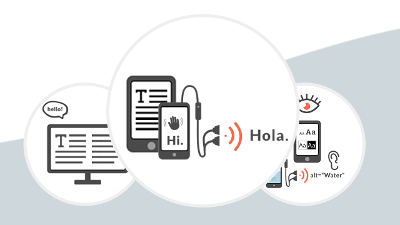
Learn about the built-in features of reading systems that allow learners to personalize and customize their experiences once they have downloaded a high-quality, accessible EPUB title. Part 2 of a 3-part series from the AEM Center at CAST.
-
Webinar

3:00PM – 4:00PM ET on Thursday, May 9, 2019
The Quality Indicators for the Provision of Accessible Educational Materials (AEM) can be used by faculty, IT, instructional designers, administrators, and others at higher ed institutions to self-assess and map improvements of course material accessibility. Join a discussion with a panel of higher ed professionals who have experience with many of the Critical Components of the Quality Indicators. To get the most out of the webinar, we recommend previewing the Quality Indicators (http://aem.cast.org/policies/quality-indicators-provision-aem.html) and the Higher Education Critical Components (http://aem.cast.org/policies/higher-education-critical-components.html).
-
Presentation

3:00PM – 3:00PM ET on Monday, October 17, 2022
Participants will learn about #GoOpen lead partners and steering committee efforts to develop leadership structures, engagement tools, and strategic plans to support shifts and actions aimed at advancing OER in the K-12 domain. Learn about a new centralized hub to support a broad-based national platform of participation.
-
Webinar
2:00PM – 3:00PM ET on Thursday, May 16, 2024
Join CAST and SETDA for a comprehensive look at Universal Design for Learning (UDL). This webinar dives into the UDL framework, emphasizing its principles and practical application in education. Discover how UDL aligns with the 2024 National Educational Technology Plan (NETP), fostering inclusive and engaging learning experiences. Be part of the conversation to create an adaptive, inclusive future for all learners!
-
Presentation

5:00PM – 5:55PM ET on Monday, October 18, 2021
The session will feature a panel with members of K-12 Voices for Open, including district, state, and organizational leaders in open education to discuss pressing issues for the K-12 open education environment.
-
Presentation

8:00AM – 9:00AM ET on Thursday, January 30, 2020
How do we respond to the changing pressures in the provision of assistive technology? The term leadership is used frequently, but with little discussion of what we mean by effective leadership in the field, and with leaders emerging in different sectors and markets. In challenging times this leadership strand spotlight asks four influential figures in the field to share their perceptions of the current and future needs for AT leadership and to highlight one figure they respect and would recognize as a leader. The panel will also consider how we develop the next generation of AT leaders to meet future demands.
-
Presentation
1:15PM – 2:05PM ET on Saturday, December 2, 2023
This session explores four myths about literacy learning: 1) Some children with disabilities do not need to learn to read and write; 2) Using speech to communicate is a prerequisite to reading and writing; 3) Children cannot have an intellectual disability and a reading disability; and 4) Using assistive technology (AT) to read and write is cheating.